
Table of Contents
ToggleKey Takeaways
- Tenting for termites (fumigation) is the most effective way to eliminate widespread drywood termite infestations throughout an entire structure.
- The fumigation process typically takes 24 to 72 hours, and you must vacate your home during treatment.
- Proper preparation — including removing food, medications, plants, and pets — is critical for a safe and successful fumigation.
- Termite tenting costs in Florida typically range from $1,200 to $2,500 for an average-sized home, depending on square footage and infestation severity.
- Fumigation kills active termites but does not prevent future infestations — ongoing monitoring and preventive treatments are essential.
Tenting for termites is one of the most effective treatments available when drywood termites have spread deep into your home’s wooden structures. If you’ve noticed small piles of frass, hollow-sounding wood, or swarming insects near your windows, you could be dealing with a serious infestation that spot treatments alone can’t solve. Understanding termites and how fumigation works gives you the knowledge to make the right decision for your home. In this guide, you’ll learn exactly what happens during the tenting process, how to prepare your home, what it costs, and how to protect your property after treatment. Whether you’re facing an active infestation or exploring your treatment options, this detailed breakdown covers everything you need to know about termite tenting.
What Is Tenting for Termites and How Does It Work?
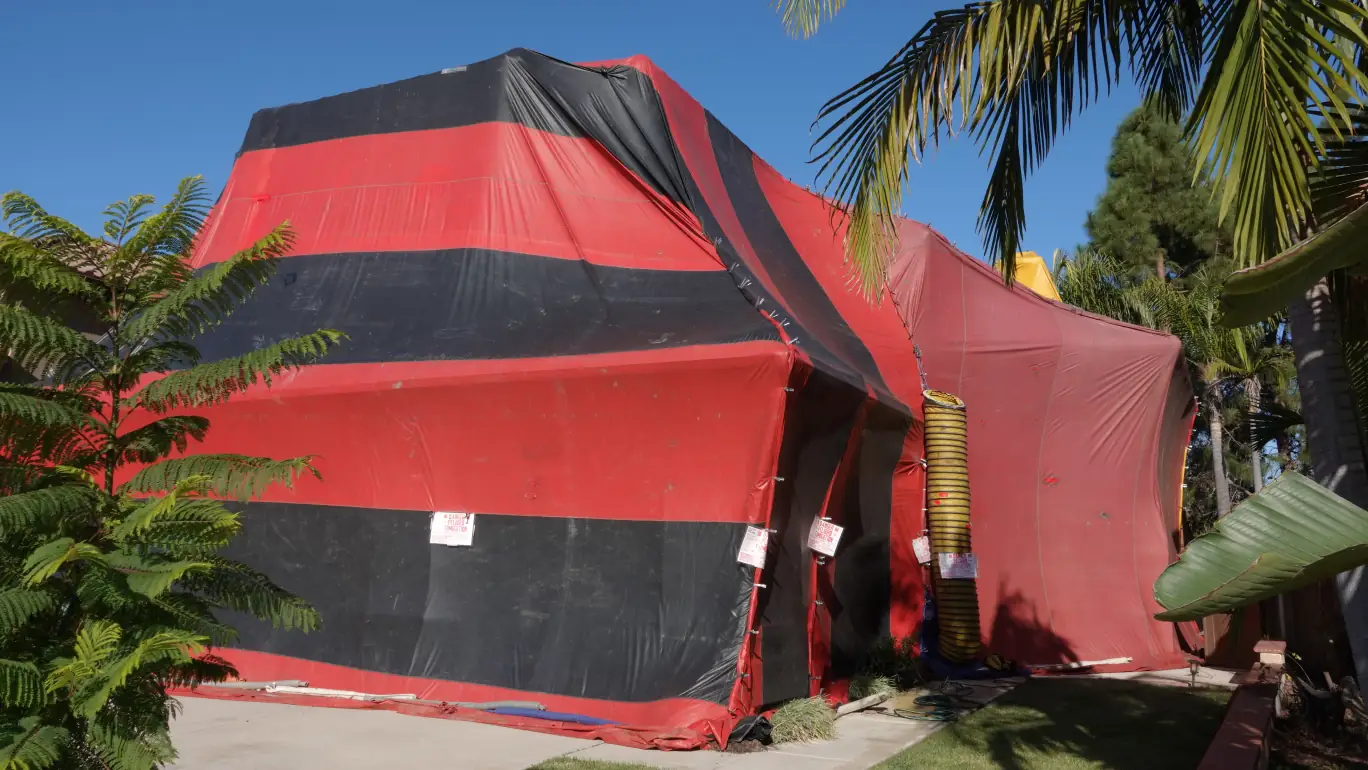
Tenting for termites — also called structural fumigation — involves covering your entire home with large, sealed tarps and releasing a gas fumigant inside. The most commonly used chemical is sulfuryl fluoride (marketed as Vikane), which penetrates every crack, crevice, wall void, and piece of wood throughout the structure.
The gas reaches areas that no other treatment method can access. This is what makes tenting so effective against drywood termite infestations that have spread to multiple locations within a home. Unlike localized treatments that target visible colonies, fumigation eliminates termites hiding in walls, attics, roof framing, and furniture — all at once.
Here’s the basic process:
- A licensed fumigation company seals the entire structure with tarps
- Sulfuryl fluoride gas is released throughout the enclosed space
- The gas circulates for 24 to 72 hours, depending on temperature and infestation severity
- Technicians aerate the home and test air quality before clearance
- You receive confirmation that the home is safe to re-enter
The fumigant works by disrupting the cellular respiration of termites. It is lethal to all life stages — eggs, larvae, workers, soldiers, and reproductive swarmers. Once the gas dissipates and the tarps are removed, no chemical residue remains inside the home.
When Does Your Home Need Termite Tenting?
Not every termite problem requires fumigation. Tenting is typically recommended when drywood termites have infested multiple areas of a structure, making spot treatments impractical. A thorough inspection by a licensed pest control professional determines whether tenting is necessary.
You may need termite tenting if:
- Inspectors find drywood termite activity in three or more separate areas of your home
- Termite colonies exist deep within inaccessible wall voids or roof structures
- Previous spot treatments or localized methods have failed to control the infestation
- You’re preparing to sell your home and need a clean termite clearance letter
Recognizing the early signs of termites in your home can help you catch an infestation before it reaches the point where fumigation becomes the only viable option. However, drywood termites are notoriously difficult to detect because they live entirely inside wood and leave few visible signs until the colony matures.
In Florida, drywood termites are extremely common, and the warm, humid climate allows colonies to grow year-round. Many homeowners don’t realize they have a problem until a professional inspection reveals widespread damage.
How to Prepare Your Home for Termite Tenting
Preparation is one of the most important parts of the fumigation process. Because the gas used during tenting is toxic to all living organisms, you must take specific steps to protect your family, pets, and belongings.
Food and Medication Removal
All food items that are not sealed in airtight containers — including items in your refrigerator and freezer — must be removed from the home or double-bagged in special Nylofume bags provided by your fumigation company. This includes:
- Open packages of cereal, chips, crackers, and dry goods
- Fresh fruits, vegetables, and bread left on counters
- All medications, vitamins, and supplements
- Pet food and treats
- Opened bottles of wine or liquor
Canned goods and factory-sealed bottles with intact seals can typically remain in the home. However, always follow your fumigation company’s specific instructions.
Plants, Pets, and Living Things
All people, pets, and plants must leave the property before tenting begins. This includes fish tanks — the fumigant will kill fish even through an aerator. Move indoor plants outside or to a neighbor’s home. Arrange boarding for pets or plan to stay with family for the duration of the treatment.
Home and Yard Preparation
Your fumigation company will give you a detailed preparation checklist. Common requirements include:
- Trimming bushes and shrubs at least 18 inches away from exterior walls so tarps can be secured
- Removing or covering satellite dishes and antennas if necessary
- Unlocking all interior doors, cabinets, and closets to allow full gas penetration
- Turning off pilot lights on gas appliances and disconnecting the gas supply
- Watering the soil around your foundation to protect landscaping from tarp compression
Following these preparation steps ensures the treatment is both safe and maximally effective.
What Happens During the Termite Tenting Process?
On the day of fumigation, a licensed crew arrives and covers your entire home with large, heavy-duty tarps. These tarps are sealed tightly at the base — typically using sandbags or water-filled clamps — to prevent gas from escaping.
Once the structure is fully sealed, the fumigation technician introduces sulfuryl fluoride gas through hoses inserted at strategic points. Monitoring devices are placed throughout the home to ensure the gas reaches the required concentration levels in every area.
The home remains tented and sealed for a period determined by several factors:
Factors That Affect Fumigation Duration
| Factor | Impact on Duration |
|---|---|
| Home size (square footage) | Larger homes require more gas and longer exposure times |
| Outside temperature | Cooler temperatures slow gas penetration, extending the process |
| Severity of infestation | Heavy infestations may require higher concentrations or longer exposure |
| Construction type | Concrete block homes retain gas differently than wood-frame homes |
| Wind conditions | High winds can affect tarp integrity and gas containment |
Most residential fumigations in Florida are completed within 24 to 72 hours. After the exposure period, technicians open the tarps and use fans to aerate the structure. They test the air inside with sensitive detection equipment and will not clear the home for re-entry until gas levels drop below safe thresholds — typically 1 part per million (ppm) or less.
How Much Does Termite Tenting Cost?
The cost of termite tenting depends primarily on your home’s size, the extent of the infestation, and your geographic location. In Florida, homeowners typically pay between $1,200 and $2,500 for fumigation of an average-sized home (around 1,500 to 2,500 square feet). Larger homes or severe infestations can push costs to $3,500 or more.
Several factors influence the final price:
- Square footage: Most companies charge $1 to $3 per square foot
- Accessibility: Homes with complex rooflines or tight lot spacing may cost more
- Warranty: Some companies include a post-treatment warranty, which adds value
- Re-treatment needs: If previous treatments failed, additional preparation may be required
For a more detailed breakdown of fumigation pricing, our guide on how much fumigation costs provides current pricing information specific to Florida homeowners.
While fumigation is more expensive upfront than spot treatments, it often saves money in the long run by eliminating the entire infestation in a single treatment. Repeated spot treatments that fail to reach hidden colonies can end up costing more over time. Understanding how much termite treatments cost across different methods helps you compare your options.
Tenting for Termites vs. Other Treatment Methods
Fumigation isn’t the only way to deal with termites. However, it’s the only treatment that can reach every part of a structure simultaneously. Here’s how tenting compares to other common approaches:
| Treatment Method | Best For | Limitations |
|---|---|---|
| Fumigation (Tenting) | Widespread drywood termite infestations | No residual protection; requires vacating the home |
| Spot Treatment (Foam/Liquid) | Small, localized drywood colonies | Cannot reach termites hidden deep in walls |
| Heat Treatment | Localized drywood infestations in accessible areas | Difficult to heat entire structure evenly |
| Soil Treatment (Termiticide) | Subterranean termites | Does not work for drywood termites |
| Bait Stations | Subterranean termite monitoring and control | Slow-acting; not effective for drywood species |
If you’re weighing your options, our comparison of how to treat drywood termites in Florida can help you understand which method fits your specific situation. For localized infestations, heat treatment for termites may be a viable alternative that doesn’t require chemicals.
The right treatment depends on the termite species involved, the extent of the infestation, and the construction of your home. A comprehensive guide to termites in Florida covers the different species you might encounter and the best control strategies for each.
What to Do After Termite Tenting Is Complete
Once your fumigation company clears the home for re-entry, you’ll want to take a few important steps before settling back in. While the fumigant itself leaves no residue, there are practical tasks to handle.
- Ventilate your home: Open all windows and doors for several hours to allow fresh air to circulate thoroughly
- Clean surfaces: Wipe down countertops, tables, and food preparation areas with soap and water
- Dispose of opened items: If any unsealed food or medication was accidentally left behind, throw it away
- Check for dead termites: You may find dead swarmers, workers, or frass near previously infested areas — this is normal and shows the treatment worked
- Schedule a follow-up inspection: Have your pest control company return in 30 to 60 days to confirm the infestation is fully eliminated
For a complete step-by-step walkthrough, our guide on what to do after termite fumigation covers everything from cleaning to scheduling follow-up care.
How to Prevent Termites After Tenting Your Home
One critical fact homeowners must understand: tenting for termites kills active infestations, but it does not prevent new ones. The moment the gas dissipates, your home has zero residual protection against termites. This is why post-fumigation prevention is essential.
Here are proven strategies to keep termites from returning:
- Schedule annual termite inspections: A professional can catch new activity before it becomes a full infestation
- Reduce wood-to-soil contact: Keep mulch, firewood, and wooden planters away from your foundation
- Fix moisture issues: Repair leaky pipes, ensure proper drainage, and keep humidity levels low in crawl spaces and attics
- Seal entry points: Caulk cracks around windows, doors, and utility penetrations
- Consider a termite bond: A termite bond provides ongoing monitoring and re-treatment coverage, giving you year-round peace of mind
Florida’s climate makes homes particularly vulnerable to reinfestation. Drywood termites swarm regularly in Florida, and new colonies can establish themselves quickly in unprotected wood. Investing in ongoing protection is just as important as the initial treatment.
If you’re a Florida homeowner dealing with termite concerns or considering fumigation, working with an experienced pest control professional ensures you get accurate identification, proper treatment, and a long-term prevention plan tailored to your home.
Frequently Asked Questions
-
How long do you have to stay out of your home during termite tenting?
Most homeowners need to vacate their home for 24 to 72 hours during fumigation. The exact timeframe depends on your home's size, the fumigant concentration used, and weather conditions. Your fumigation company will notify you when air quality testing confirms the home is safe to re-enter.
-
Is termite tenting safe for my home's structure and belongings?
Yes, sulfuryl fluoride does not damage building materials, fabrics, electronics, or furniture. The gas leaves no residue once the home is aerated. However, you must remove or properly bag all food, medications, and consumable items as directed by your fumigation company.
-
Does termite tenting kill all types of termites?
Fumigation is highly effective against drywood termites because they live entirely inside the wood of your home. It will also kill any subterranean termites present inside the structure during treatment. However, subterranean colonies that originate underground may reinvade because the fumigant does not treat the soil.
-
Can I do termite tenting myself or is a professional required?
Termite fumigation requires a licensed pest control operator in every state. The chemicals used are extremely hazardous and are only available to certified professionals. There is no legal or safe way to perform structural fumigation as a DIY project.
-
How soon can termites return after tenting?
Termites can theoretically return at any time after the fumigant gas dissipates because tenting provides no residual protection. New swarmers could enter your home within weeks or months, especially during swarming season in Florida. This is why ongoing monitoring and preventive measures are critical after fumigation.
-
Will termite tenting get rid of other pests like roaches or bed bugs?
Yes, sulfuryl fluoride fumigation kills virtually all insects and pests inside the treated structure, including cockroaches, beetles, bed bugs, and stored-product pests. However, like termites, these pests can re-enter your home once the gas dissipates since there is no lasting chemical barrier.